DANGEMUS
The packaging design of the absinthe stands as an amalgamation of myth and reality surrounding this mysterious drink.
Known as “the green fairy,” this potent spirit is distilled from herbs like wormwood, anise, and fennel, and is famed for its use among bohemian artists and writers. Shrouded in legends, absinthe was once seen as a source of creative inspiration—so much so that it became associated with figures like Van Gogh and Picasso, who immortalized it in their works. Inspired by the legends linking it to death, madness, and the creativity of artists such as Van Gogh, the logo evokes the spirit of the Belle Époque—the era of its creation.
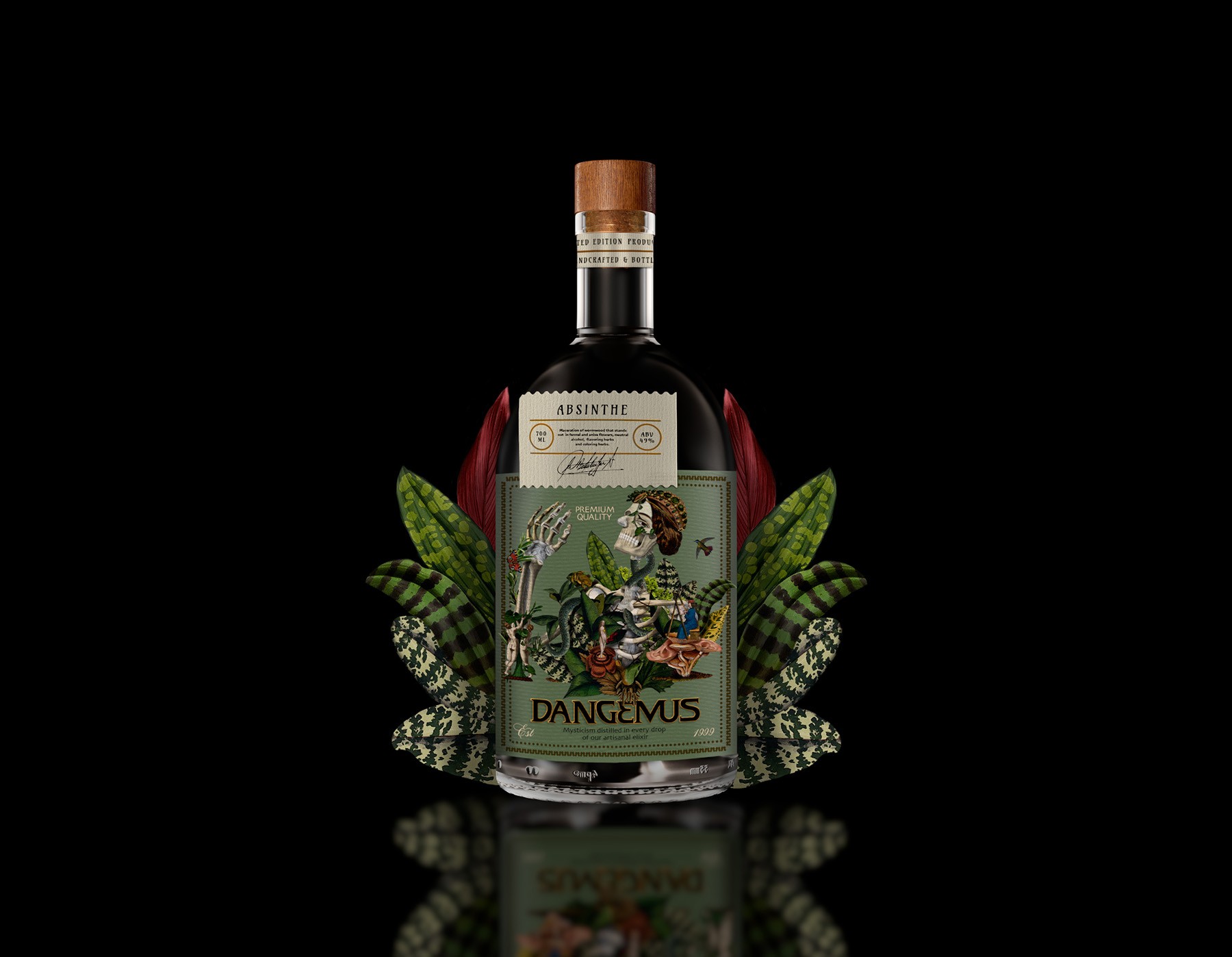
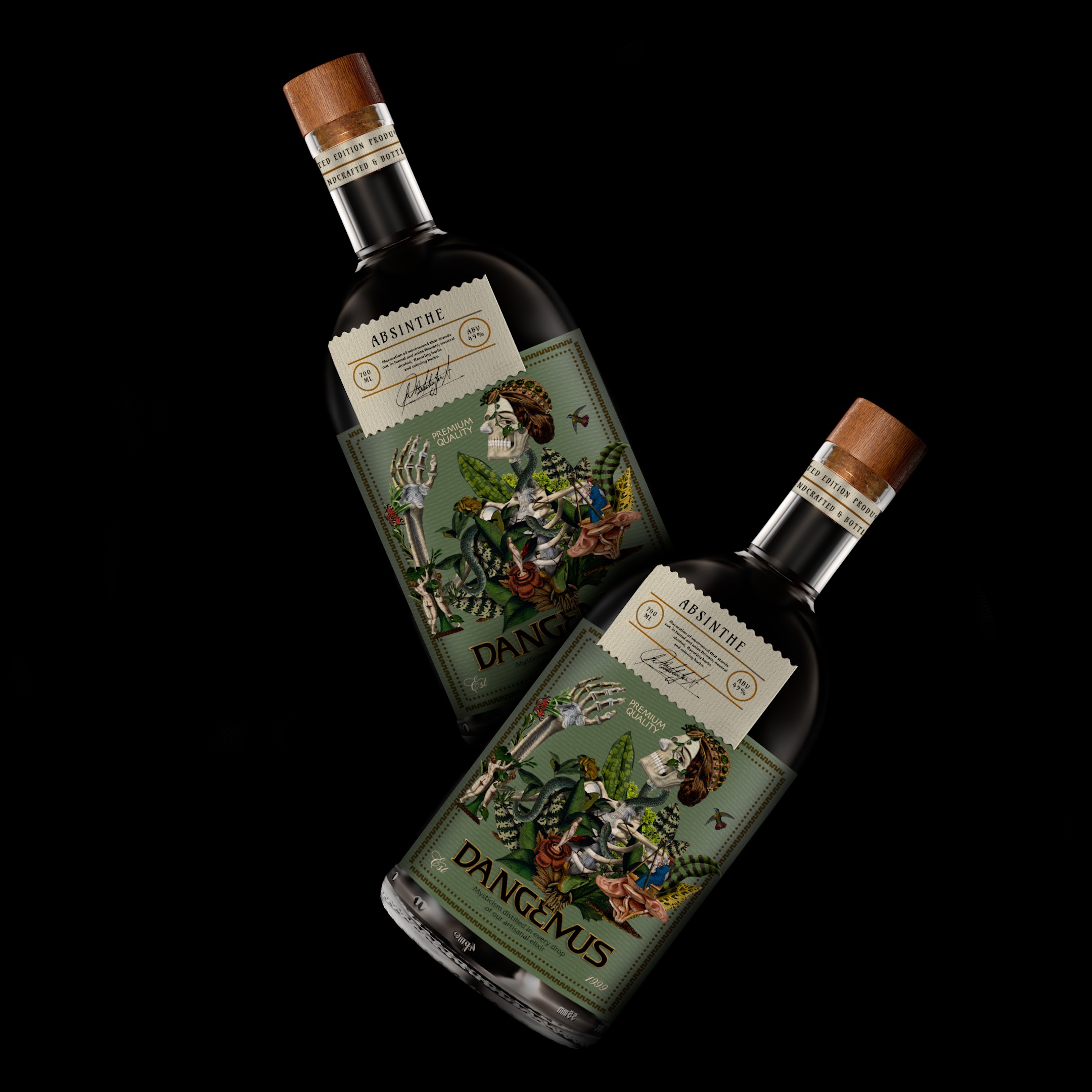
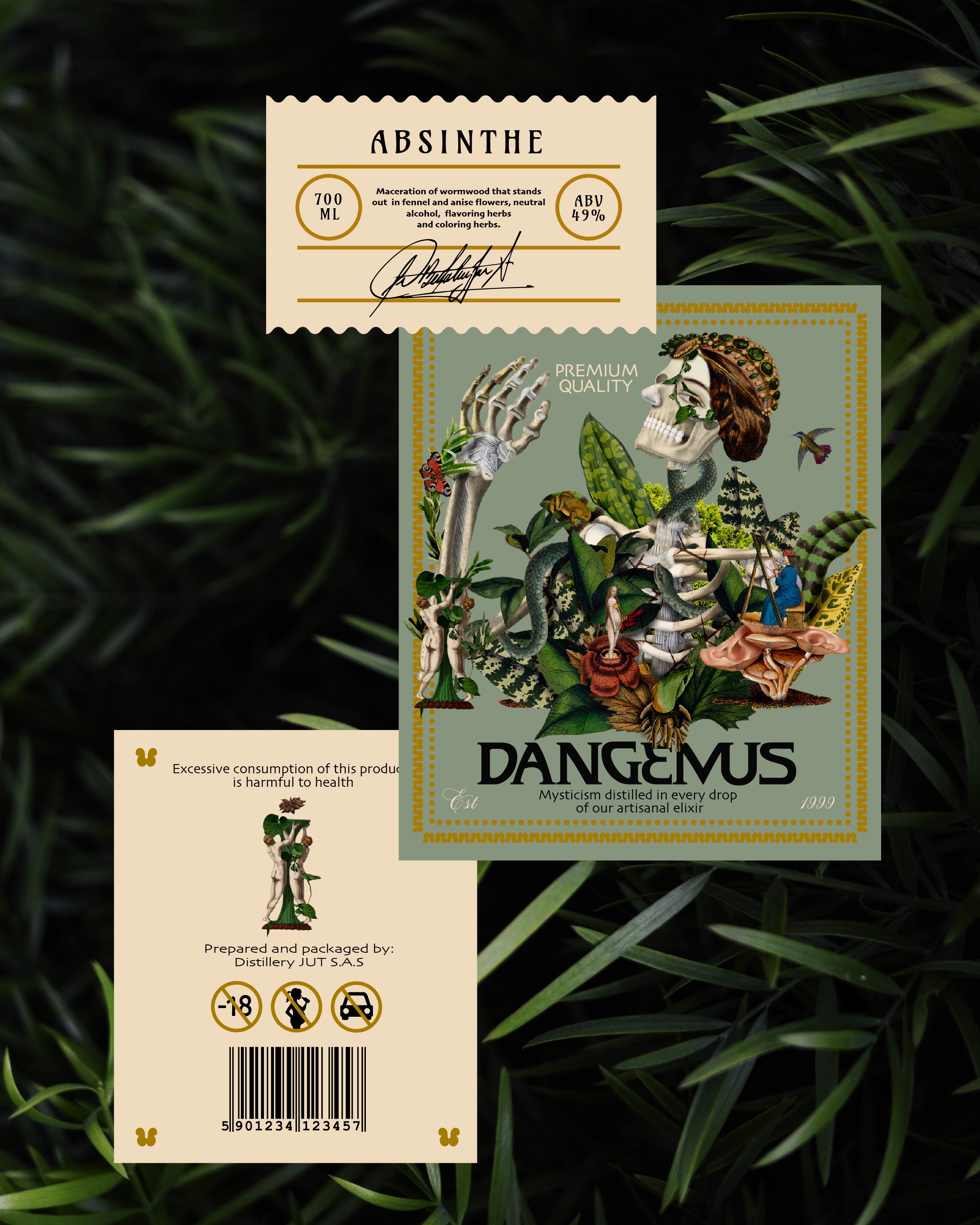
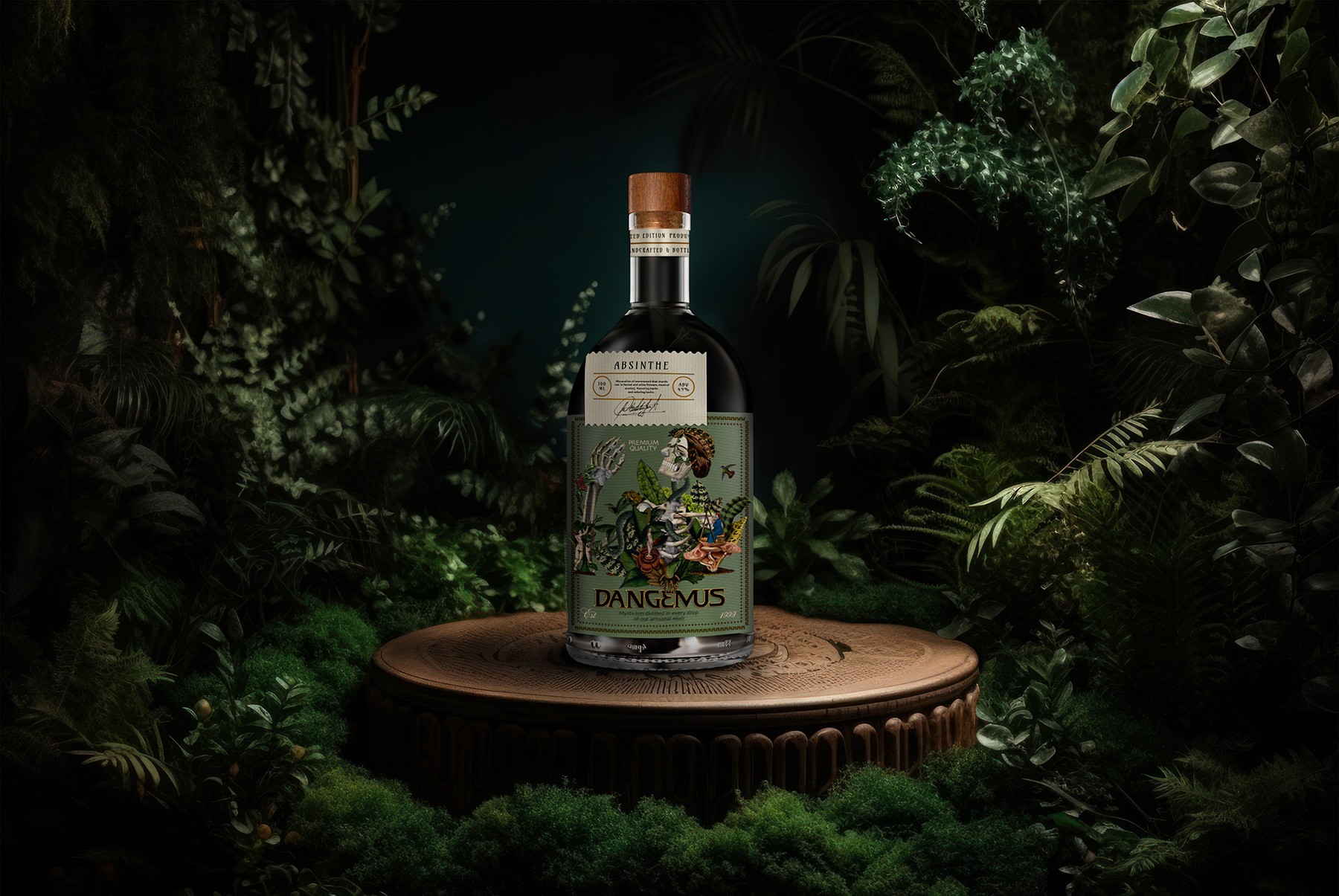
The bottle label becomes a symbolic collage capturing the essence of absinthe: a skull surrounded by key ingredients like anise and wormwood, along with plants that allude to hallucinations.
Interwoven thorns highlight its dangerous reputation, while the presence of a painter and elements such as snakes, hummingbirds, and butterflies provide contrast—hinting at the duality of absinthe as both a peril and a muse.
Together, the packaging design becomes a visual narrative that embraces the rich history and mythology surrounding this enigmatic spirit.
DANGEMUS
The packaging design of the absinthe stands as an amalgamation of myth and reality surrounding this mysterious drink.
Known as “the green fairy,” this potent spirit is distilled from herbs like wormwood, anise, and fennel, and is famed for its use among bohemian artists and writers. Shrouded in legends, absinthe was once seen as a source of creative inspiration—so much so that it became associated with figures like Van Gogh and Picasso, who immortalized it in their works. Inspired by the legends linking it to death, madness, and the creativity of artists such as Van Gogh, the logo evokes the spirit of the Belle Époque—the era of its creation.
The bottle label becomes a symbolic collage capturing the essence of absinthe: a skull surrounded by key ingredients like anise and wormwood, along with plants that allude to hallucinations.
Interwoven thorns highlight its dangerous reputation, while the presence of a painter and elements such as snakes, hummingbirds, and butterflies provide contrast—hinting at the duality of absinthe as both a peril and a muse.
Together, the packaging design becomes a visual narrative that embraces the rich history and mythology surrounding this enigmatic spirit.
The packaging design of the absinthe stands as an amalgamation of myth and reality surrounding this mysterious drink.
Known as “the green fairy,” this potent spirit is distilled from herbs like wormwood, anise, and fennel, and is famed for its use among bohemian artists and writers. Shrouded in legends, absinthe was once seen as a source of creative inspiration—so much so that it became associated with figures like Van Gogh and Picasso, who immortalized it in their works. Inspired by the legends linking it to death, madness, and the creativity of artists such as Van Gogh, the logo evokes the spirit of the Belle Époque—the era of its creation.
The bottle label becomes a symbolic collage capturing the essence of absinthe: a skull surrounded by key ingredients like anise and wormwood, along with plants that allude to hallucinations.
Interwoven thorns highlight its dangerous reputation, while the presence of a painter and elements such as snakes, hummingbirds, and butterflies provide contrast—hinting at the duality of absinthe as both a peril and a muse.
Together, the packaging design becomes a visual narrative that embraces the rich history and mythology surrounding this enigmatic spirit.