FIYU
Cacao, known as the "food of the gods," has been treasured since ancient times for its richness and deep cultural significance.
The Mayans and Aztecs once used it as currency and in ceremonial drinks, and in Ecuador, it has played a key role in the country’s economy.
Its cultivation is a fascinating process: from the thousands of flowers that bloom on a cacao tree, only a few manage to become fruit.
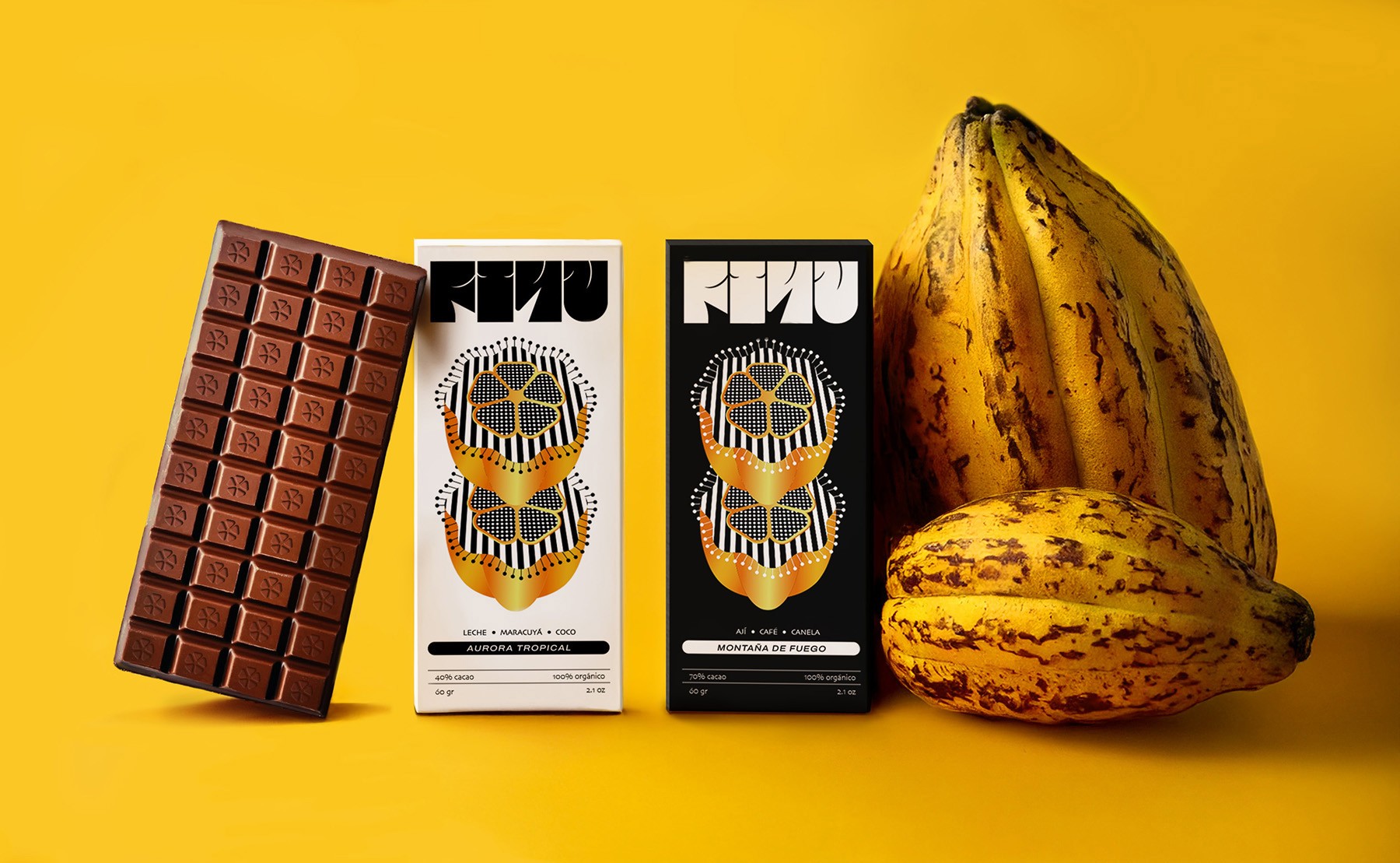
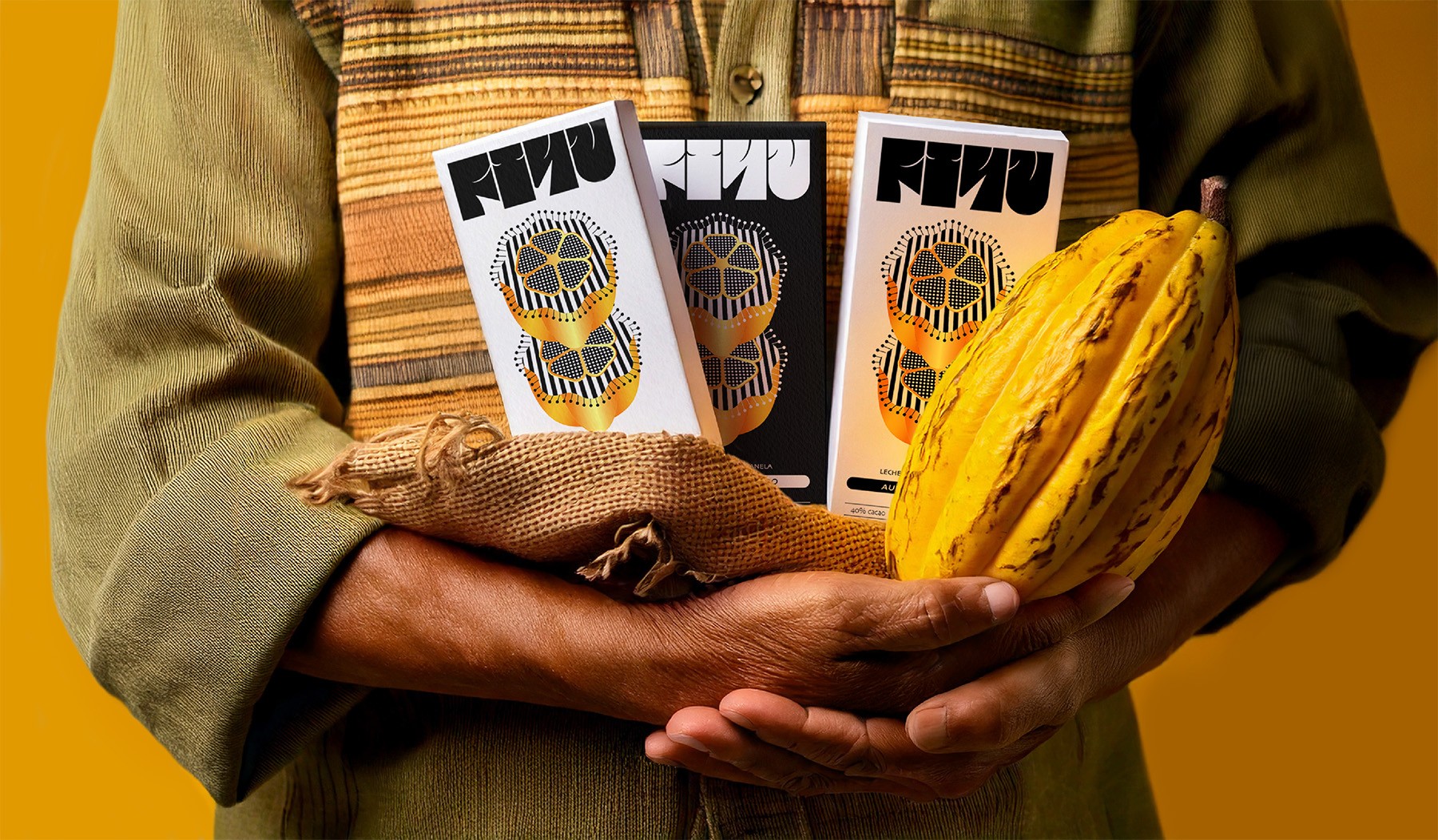
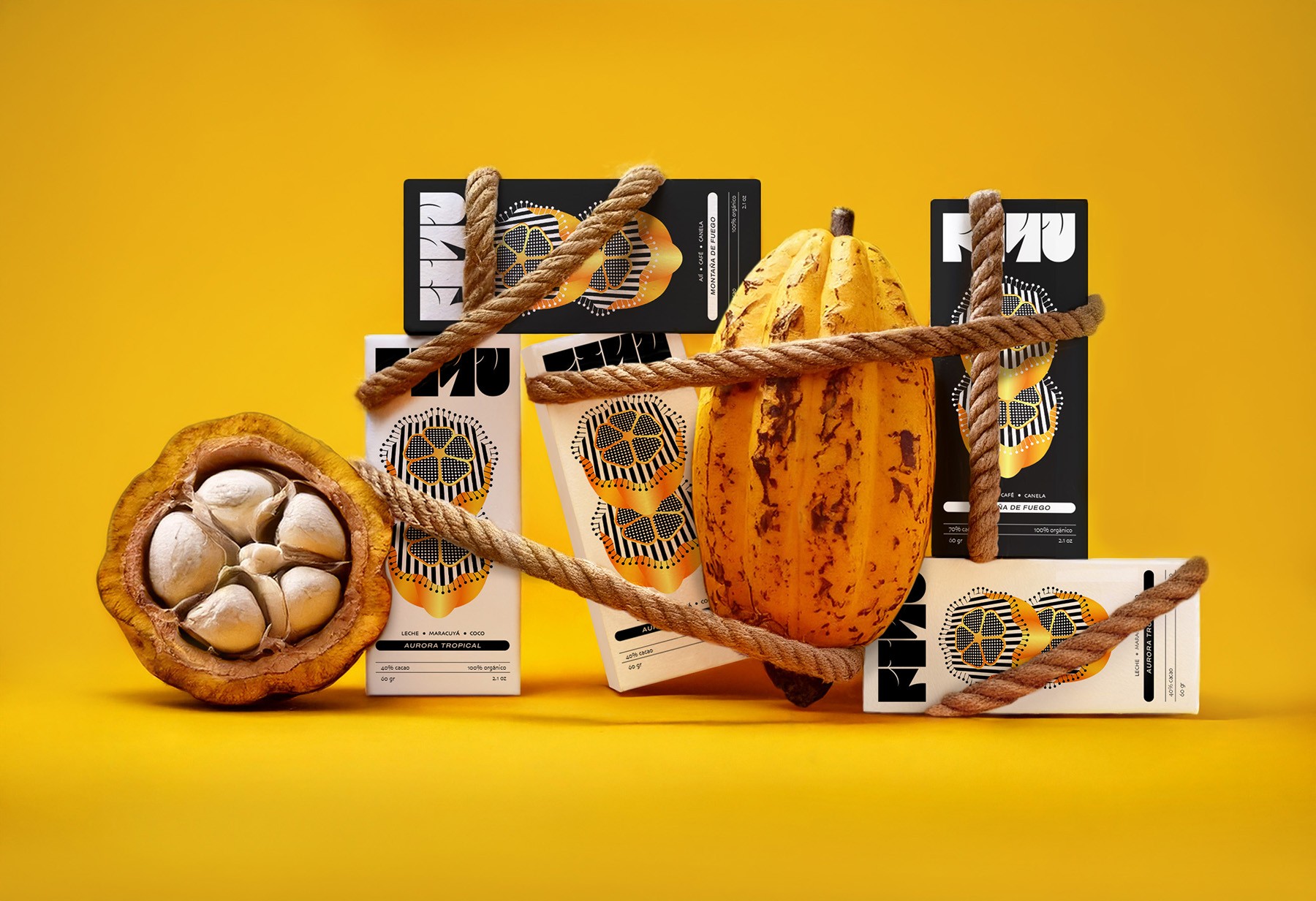
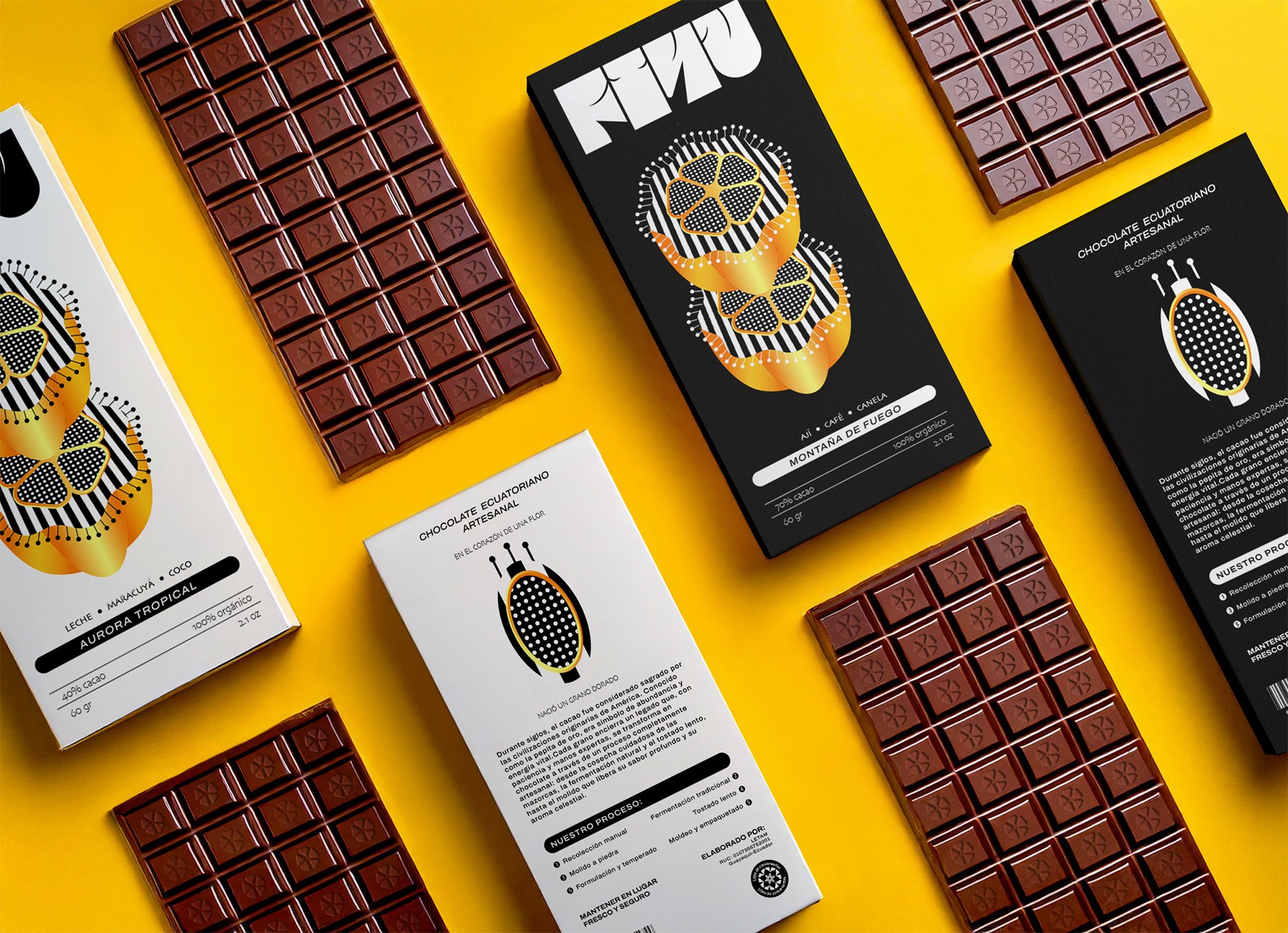
This rarity inspires the packaging illustration, where a single flower emerges among cacao beans, symbolizing the magic of this cycle.The yellow hue evokes the vibrant color of ripe cacao, while the golden gradients pay tribute to its nickname, “golden nugget.”
FIYU
Cacao, known as the "food of the gods," has been treasured since ancient times for its richness and deep cultural significance.
The Mayans and Aztecs once used it as currency and in ceremonial drinks, and in Ecuador, it has played a key role in the country’s economy.
Its cultivation is a fascinating process: from the thousands of flowers that bloom on a cacao tree, only a few manage to become fruit.
This rarity inspires the packaging illustration, where a single flower emerges among cacao beans, symbolizing the magic of this cycle.The yellow hue evokes the vibrant color of ripe cacao, while the golden gradients pay tribute to its nickname, “golden nugget.”
Cacao, known as the "food of the gods," has been treasured since ancient times for its richness and deep cultural significance.
The Mayans and Aztecs once used it as currency and in ceremonial drinks, and in Ecuador, it has played a key role in the country’s economy.
Its cultivation is a fascinating process: from the thousands of flowers that bloom on a cacao tree, only a few manage to become fruit.
This rarity inspires the packaging illustration, where a single flower emerges among cacao beans, symbolizing the magic of this cycle.The yellow hue evokes the vibrant color of ripe cacao, while the golden gradients pay tribute to its nickname, “golden nugget.”